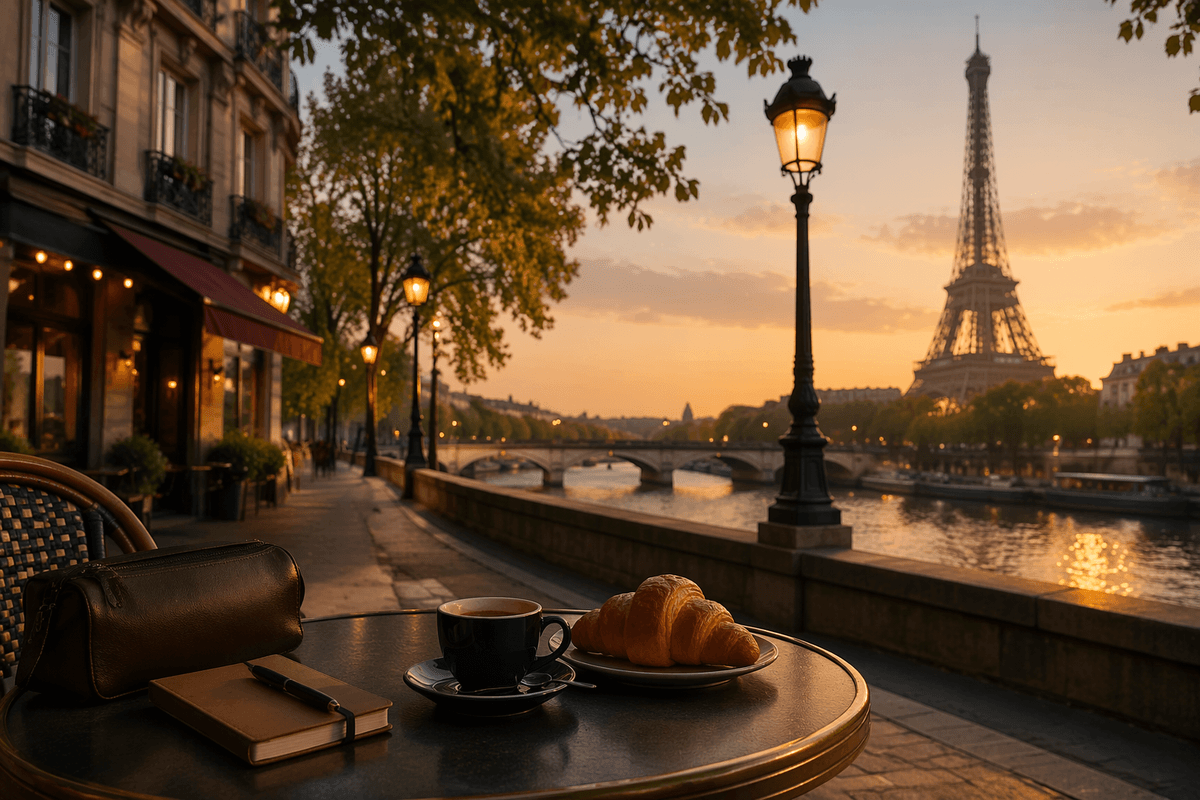
Paris solo: why it feels thrilling—and intimidating
The first time I pinned “Louvre, Eiffel, Montmartre” on a map, Paris looked like a perfect loop—until I realized I’d be doing it alone after work, in the dark, with a phone battery that never seems to last as long as the itinerary. Solo travel makes every decision feel louder: you don’t split Ubers, you don’t rotate navigation duty, and if a street feels off, you’re the only vote that matters.
But that’s also the thrill. You can spend 90 minutes in one gallery without negotiating, detour into a bakery because the line is short, or bail on a “must-see” when you’re tired. The mental load is real, though: prebooking removes uncertainty but can lock you into rigid timing, while winging it can mean sold-out tickets and longer lines. The goal isn’t to see everything—it’s to pick a base and a rhythm that keeps evenings calm and days focused.
Where to stay for safety, vibes, and access
My biggest hesitation booking a hotel was realizing I’d be walking “home” alone at 10:30 p.m. after dinner, not floating back on a romantic montage. For a first solo trip, I’d optimize for a simple return route over the cutest street: stay central enough that you can walk or take one straightforward metro line, and pay a little more for a place within 5–8 minutes of a station you’ll actually use (stairs and transfers feel longer when you’re tired).
If you want an easy, low-friction base, look at the 1st/2nd/3rd/4th (Louvre/Opéra/Le Marais) or the 5th/6th (Latin Quarter/Saint-Germain). They’re not the cheapest, but you “buy” shorter rides, more lit streets, and the option to end the night early without it feeling like a logistical project. The catch is crowds: in the Marais especially, weekend evenings can feel busy rather than cozy, and mid-range rooms can be small for the price.
For a calmer, more local feel that still behaves well for transit, the 9th/10th (around Saint-Georges/Poissonnière) and parts of the 11th (Oberkampf-ish) can work—just be picky about the exact block. I’d personally avoid booking right next to the major train stations if you’re anxious; it’s not automatically “unsafe,” it’s just more noise, more loitering, and more decision-making at night when you want the opposite.
Getting around: metro, walking, and airport transfers
The first night I tried to “just take the metro,” I lost ten minutes underground because the right entrance was across the boulevard—and that’s when I stopped pretending Paris works like a single neat grid. The metro is fast and usually the cheapest way to cover distance, but transfers and stairs feel longer after work, especially if you’re carrying a tote bag and your battery is already in the red.
I defaulted to a simple rule: walk for anything under ~25 minutes if the route is well-lit and straightforward; metro when it’s cross-city or raining; taxi/ride-hail when it’s late and I’m mentally done. Walking is the best way to learn neighborhoods, but it’s also when you’re most likely to get distracted, miss a turn, and end up on an emptier stretch than you expected.
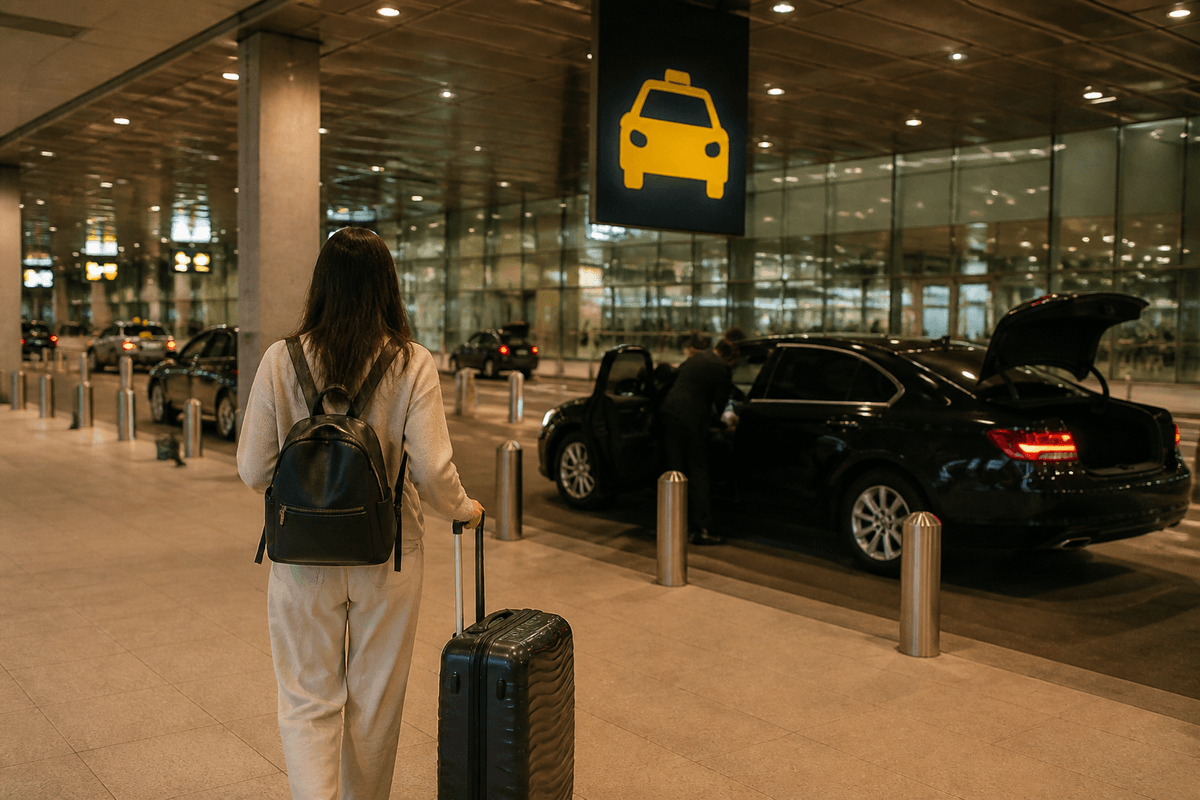
For airport transfers, I treated “cheapest” as optional and “least confusing” as mandatory. The train/RER can be efficient, but it’s unforgiving if you pick the wrong branch or you’re managing luggage solo. After a long flight, paying for a direct car or an official airport taxi felt like buying calm—just confirm the pickup point inside the terminal so you’re not negotiating on the curb.
Solo-friendly Paris: what to book vs wander
I realized I’d over-planned when my calendar had five timed entries and zero room for the very thing Paris is good at: drifting. For a first solo trip with evenings after work, I’d only “lock” the pieces that regularly sell out or save you real time—then leave the rest as flexible blocks you can spend in one neighborhood without constantly checking the clock.
What I’d book: one marquee museum you truly care about (Louvre or Musée d’Orsay) with an early-evening slot so you’re not sprinting from the office; a Seine cruise only if you want a low-effort, sit-down reset (they can feel touristy, but they’re calming when you’re tired); and any day trip (Versailles) because logistics compound when you’re solo and late trains feel more stressful. What I wouldn’t overbook: viewpoints and churches (they’re often easier to slide into), and most “photo stops” that look close on a map but steal time in transit.
My most reliable rhythm was one reserved anchor per day, then “wander with guardrails”: pick a neighborhood (Le Marais, Saint-Germain, Canal Saint-Martin) and collect two optional stops within a 15-minute walk. It works well because you can bail early if you’re drained, and it fails when you try to crisscross the city for a checklist—solo, the friction of every extra metro transfer is louder.
Eating alone without awkwardness or overspending
The first night I ate alone, my “quick dinner” turned into 25 minutes of circling because every cute brasserie looked either packed or like it wanted a two-person table. Paris is friendly to solo diners, but it’s not always fast: if you’re coming straight from work, the easiest win is aiming for places with a counter (bar seating), a small dining room, or a steady turnover—crêperies, ramen, and casual bistros behave better than the most photogenic spots on Instagram.
I set a simple spending rule that kept me from accidentally turning dinner into an event: pick one “sit-down” night where you order a starter + main (or a prix-fixe if it’s clearly listed), and make the other nights lighter—wine bar with a plate, or a bakery + cheese picnic when the weather cooperates. The friction is that solo dining can feel like you’re paying the same for half the company, so I’d rather pay for quality once than chase value every night and end up hungry at 10 p.m.
If you’re anxious about language, choosing from a posted menu you can point at is the most stress-free move—just don’t let a pushy host rush you into the first tourist menu near a big landmark. I had better meals (and fewer surprises on the bill) when I walked 5–10 minutes off the main streets and picked places where locals were eating quickly, not posing.
Safety, scams, and nighttime comfort checklist
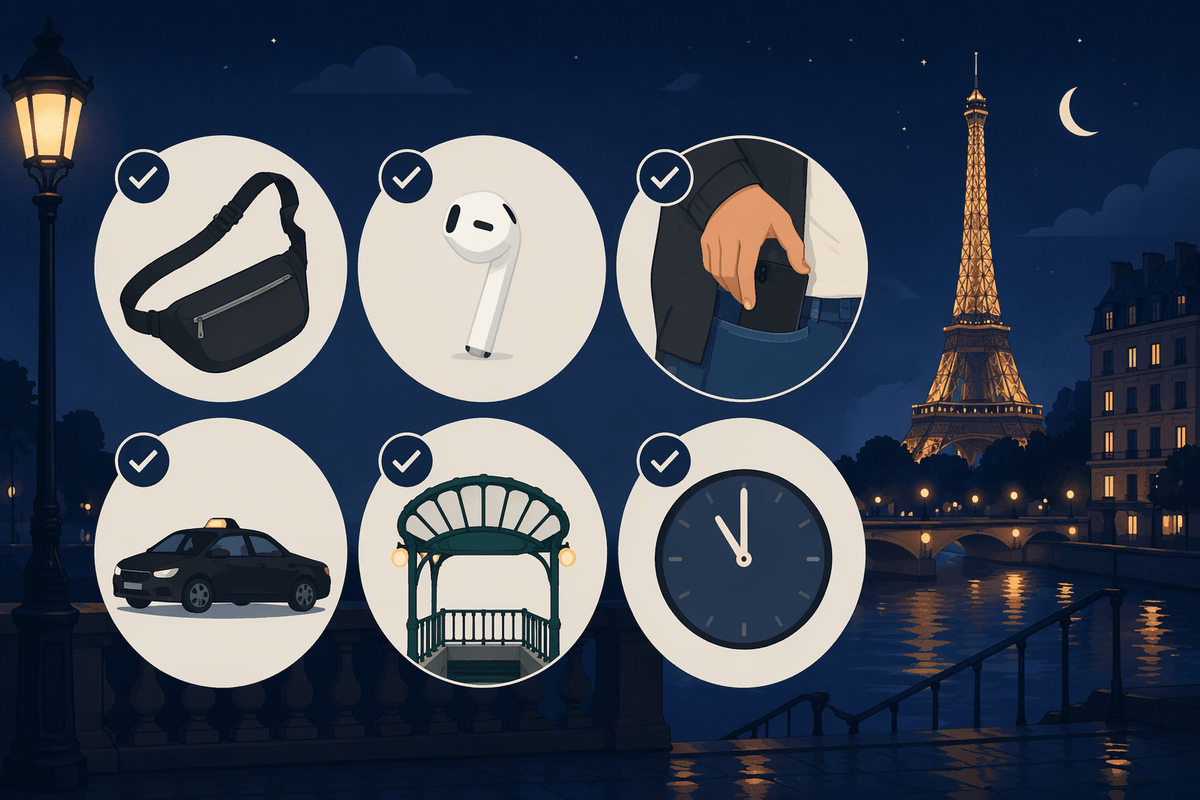
One night I realized I was walking faster than I needed to—not because anything happened, but because my route had drifted from “busy and boring” to “quiet and vaguely confusing” after one wrong turn. Since then, I treat nighttime in Paris like a set of small defaults: I keep my phone in my hand only when I’m actively navigating (then away), I use one earbud at most, and I’ll pay for a taxi/ride-hail for the last 10 minutes if I’m tired or the streets thin out.
The scams that actually reach you tend to be the same repeat offenders: anyone trying to “help” with tickets, signatures, bracelets, or dropped rings; anyone creating urgency; anyone pushing you to an ATM. My rule is simple and a little cold: no stopping, no explaining, no eye-contact negotiation—just “Non, merci” and keep moving. It works well because it ends the interaction quickly; it can feel rude, but the alternative is getting pulled into a conversation you didn’t choose.
Quick comfort checklist for evenings: carry a crossbody that zips; keep one card separate from your wallet; screenshot your hotel address (in case your data drops); know your nearest metro stop and the next one down the line; and decide in advance what “too late” means for you (mine was usually around 11 p.m. on weeknights). Paris isn’t a city you need to fear, but it rewards clear boundaries—especially when you’re solo and your energy is the real limiting factor.
Leaving Paris: feeling capable, not overwhelmed
The morning I left, the hardest part wasn’t the airport—it was deciding what to do with the last two hours without spiraling into “one more museum, one more view.” I stopped trying to optimize and instead chose a simple finish: a short walk in a neighborhood I already understood, one espresso, and then I went straight into departure mode. That restraint worked because I wasn’t navigating something new with luggage and a ticking clock; when I ignored it on a previous trip, I arrived sweaty, late, and annoyed at myself.
My leaving-day checklist is intentionally boring: pack the night before; keep one outfit and toiletries out; download your route while on hotel Wi‑Fi; and budget extra time for stairs, platform changes, and “where is the entrance?” moments. If you’re flying, I’d rather pay for a direct, official option than gamble on a perfect RER run when you’re solo and tired—saving money feels less satisfying when you’re watching minutes disappear. The real win is noticing you can make calm decisions in Paris now, not just survive the highlights.