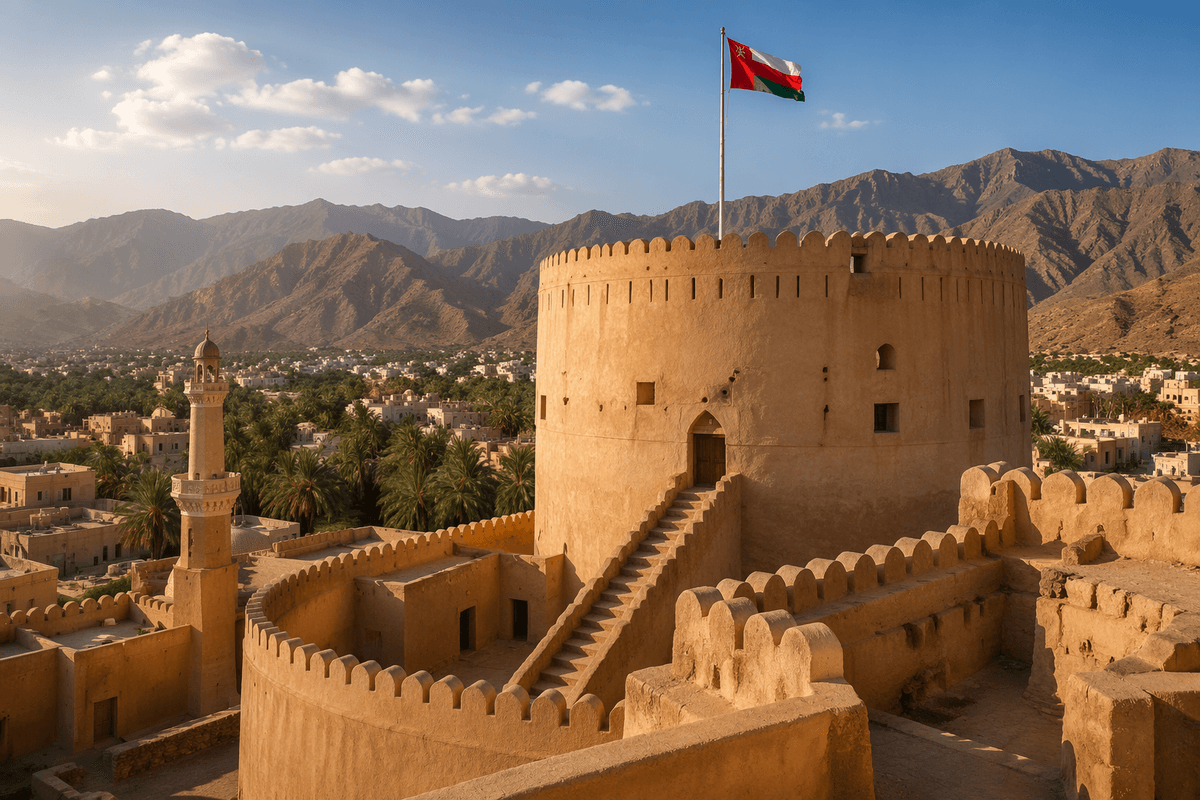
Oman’s forts: why they’re worth your time
I almost skipped Oman’s forts on my first draft itinerary because “one fort is probably enough,” and the map makes everything look deceptively close. On the ground, the difference between a quick, satisfying stop and a half-day slog comes down to restoration quality, climbability (those stairwells can be steep), and whether you’re arriving when the light and heat are working with you.
When a fort lands, it’s not just walls: you get wind-tower engineering, date-store rooms, defensive corridors, and rooftop angles that make the surrounding souq, oasis, or mountains click into place. But they’re not interchangeable—some are museum-polished and busy, others atmospheric but sparse, and a few are impressive mainly for scale (which can feel empty if you’re short on time). The win on a 7–10 day Muscat-to-Nizwa loop is picking five that match your route, then giving each enough time to actually climb, look, and read a little—rather than collecting gates from the parking lot.
Quick planning: routes, timing, tickets
I learned fast that “it’s on the way” in Oman can still mean an extra hour once you factor in parking, slow town traffic, and the fact that you’ll want rooftop time for photos. For a 7–10 day Muscat-to-Nizwa loop, I’d anchor the fort days around two bases: Muscat (for Al Jalali/Al Mirani from the outside) and Nizwa (for Nizwa, then the Bahla–Jabrin pair). The constraint is heat and stairs—midday climbs feel longer than they look on a map.
Sequencing that worked: Muscat viewpoints late afternoon (better light, less glare), then Nizwa Fort early (cooler, souq energy nearby), then a single “castle day” for Jabrin + Bahla when you’re already in the area. If you’re also swinging toward Sur, treat it as its own coastal day rather than trying to tack forts onto it—otherwise you’ll rush the interiors and the drives blur together.
Tickets are usually simple at the door, but don’t assume every site takes the same payment type or has identical hours; I’d keep small cash and buffer 15–20 minutes for entry and signage if you actually want context, not just walls.
Nizwa Fort: classic views and history
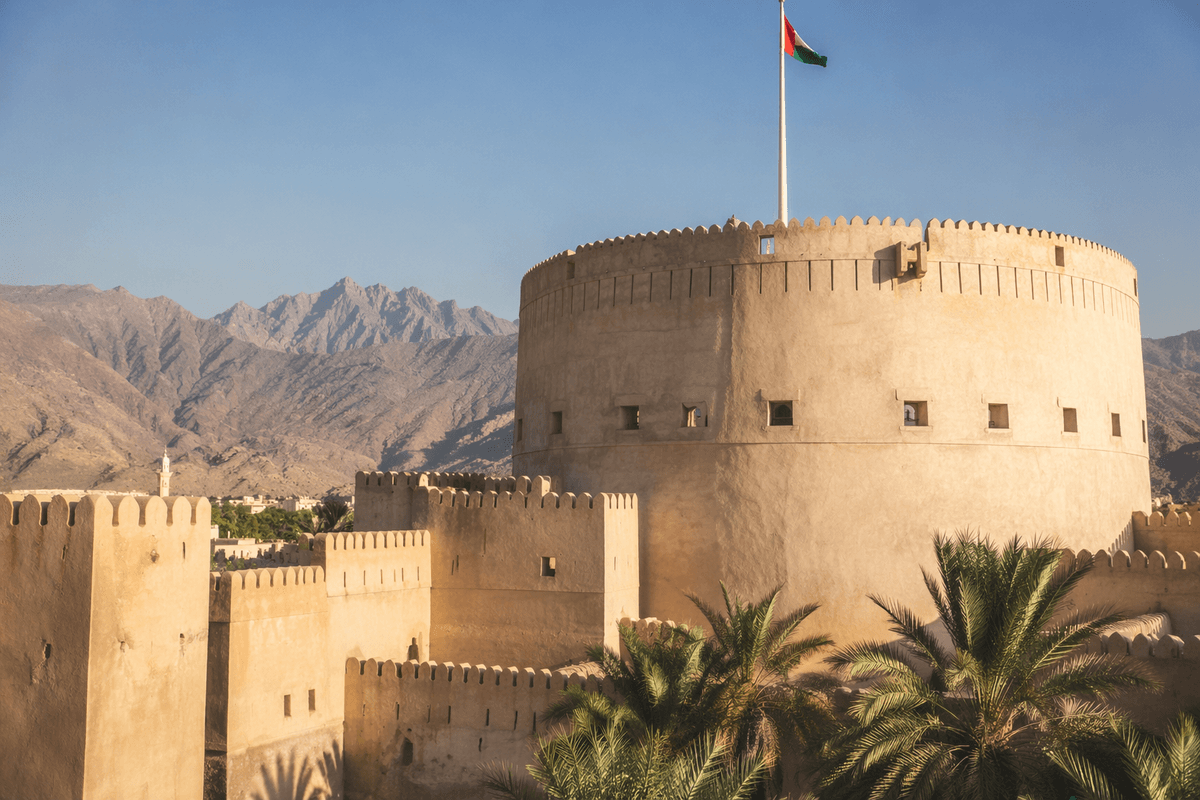
The first time I climbed Nizwa Fort I underestimated how much “just a quick look” turns into a full loop—those circular passages and stair turns slow you down in a good way, but they’re still steep and warm once the sun is up. If you want the classic shot, go straight for the rooftop early: the date palms and Hajar Mountains read instantly, and the souq below feels alive rather than washed out.
Plan 60–90 minutes inside if you’ll actually read the exhibits and not just chase viewpoints; 30 minutes works only if you’re doing a photo lap and moving on. It’s a popular stop, so the atmosphere is busier and more curated than the smaller castles—less “abandoned drama,” more interpretive signage and family groups. The payoff is context: you leave understanding why Nizwa mattered, not just that it looks good from above.
Bahla Fort: UNESCO walls and scale
Bahla is the stop that looks best before you even buy a ticket: the outer wall wraps the town in a way that finally explains why it’s UNESCO-listed. Inside, though, it’s more about scale than “rooms you’ll remember.” I found myself walking longer corridors than I expected, with fewer interpretive moments than Nizwa—great if you want the feeling of a fortress, less great if you’re chasing detailed exhibits or perfectly staged interiors.
Give it 45–75 minutes and treat it as a paired visit with Jabrin rather than a standalone highlight. In harsher midday light the tan walls can photograph flat, and the size starts to feel like effort; late afternoon gives you texture and shadows without turning the walk into a sweat test. If your day is already tight, Bahla is the one I’d shorten (quick ramparts and a circuit), because the “wow” is the mass of it—once you’ve felt that, lingering has diminishing returns.
Jabrin Castle: painted ceilings and rooms
Jabrin was the point where I stopped thinking “forts” and started thinking “house with defenses”—and that shift matters if you’re trying to avoid one more beige rampart in the noon heat. The rooms pull you inward: painted ceilings, carved doorways, and a layout that rewards slow wandering instead of rooftop sprinting. It also means you can enjoy it even when the light outside is harsh, because the best moments are indoors and in the shaded corridors.
I’d budget 60–90 minutes here, mainly because the details are easy to rush past if you’re still in “checklist mode.” The staircases are narrow and the flow through some rooms bottlenecks when a tour group arrives, so arriving earlier in the day can feel calmer even if it’s not dramatically cooler. If you’re traveling with anyone who dislikes tight climbs, Jabrin is more demanding than it looks from the courtyard—beautiful, but not a friction-free stroll.
On a Bahla–Jabrin day, I liked doing Bahla first (big, open, faster) and saving Jabrin for when my attention span needed something more specific. If you’re forced to cut one for time, Jabrin is the one I’d protect: it’s the rare stop where you remember individual rooms, not just the view from the top.
Al Jalali & Al Mirani: Muscat’s twin guardians
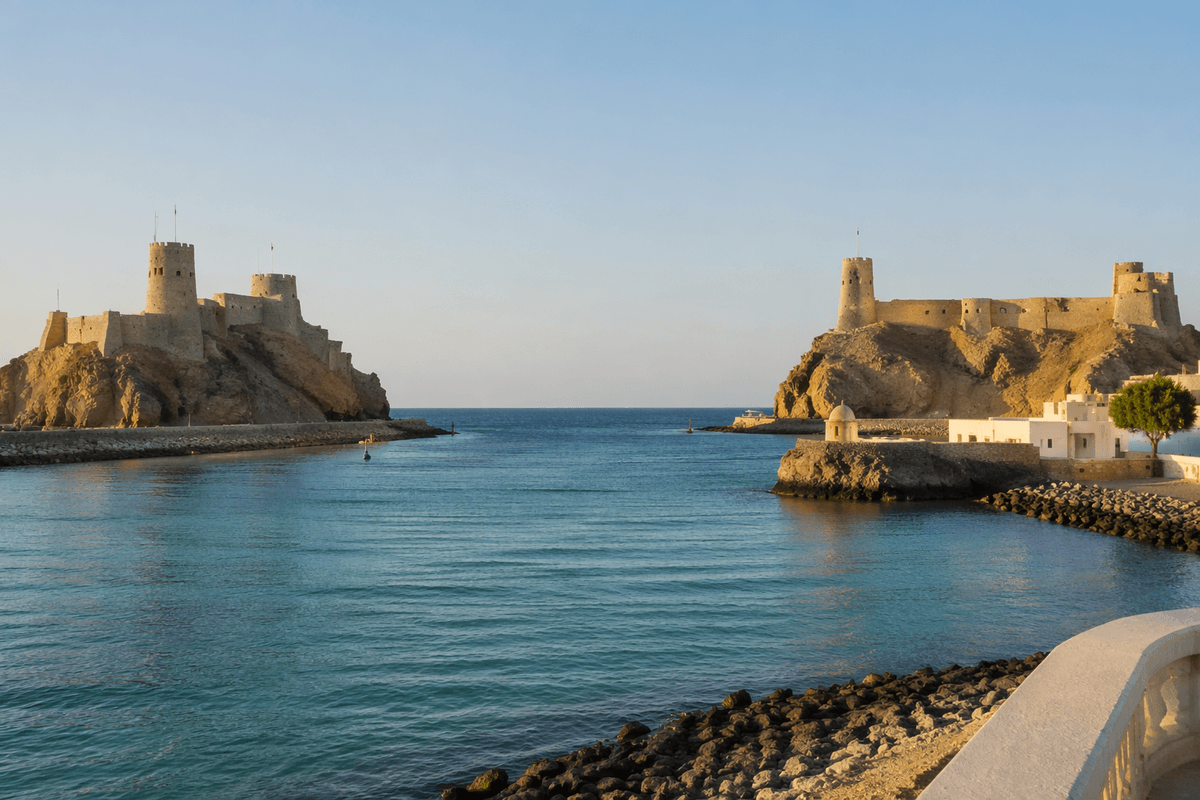
The first time I tried to “visit” Al Jalali and Al Mirani like the interior forts, I hit the reality check: for most travelers they’re a viewpoint experience, not a ticket-and-wander site. They sit on either side of Muscat’s old harbor like bookends, and the best payoff is visual—angles from Mutrah Corniche, the Al Alam Palace area, and the waterfront pullout where you can frame the forts with the bay. The constraint is access: if you’re expecting rooms, exhibits, or rooftop circuits, you’ll leave underfed.
Give it 20–40 minutes, timed for late afternoon when the stone catches texture instead of glare. Midday works for a quick “seen it” drive-by, but photos flatten fast and the heat makes lingering feel pointless. If your Muscat day is already full, treat the twins as a light add-on between stops, not a destination that steals hours you could spend inside Nizwa or Jabrin.
Pick your five and leave with context
The moment I stopped trying to “see them all,” the trip got easier: pick Nizwa (60–90 min) for the rooftop-and-context combo, and Jabrin (60–90 min) when you want rooms that feel specific—not just more ramparts. Keep Bahla (45–75 min) for scale, but go in knowing it’s more walking than exhibits, so it’s the easiest to compress if the day starts slipping.
For the other two, count Al Jalali and Al Mirani separately—but as a photo stop (20–40 min total), not an interior visit, because access is the constraint. Sequence it simply: Muscat viewpoints late afternoon, Nizwa early, then a single Bahla-first/Jabrin-last day from Nizwa so you’re not doing long drives with tired legs and short attention spans.