Amsterdam beyond the postcards: where to wander?
The first mistake I nearly made was treating “the canals” as one interchangeable loop—until I watched my map turn into a knot of bridges, dead ends, and déjà vu. For a first visit with 2–4 days, the smarter move is picking two anchor areas per walk: one high-reward-but-busy zone (think the Canal Belt near the Nine Streets) paired with one calmer counterweight (like Jordaan’s side canals). It keeps the scenery high without burning time in crowds that all look the same after the third selfie-stick jam.
Start with a simple north-to-west drift: Amsterdam Centraal → Damrak (fast, but skippable if it’s packed) → De Wallen edge streets → Nieuwmarkt → cut toward the Brouwersgracht/Prinsengracht area and let the canals “pull” you west into Jordaan. This route works well in daylight when museums and shops give you natural pauses; it works poorly in heavy rain because you’ll be exposed and tempted into tourist-trap cafés.
If you’re building routes, plan one “early window” (before 10:00) for postcard canals, and save your second walk for late afternoon into evening when Jordaan and the quieter rings feel lived-in. When your feet give out, don’t force a backtrack—hop on tram 2/12/14 to reset your starting point and keep the walk linear.
Choose your vibe: canals, culture, local, or revelry
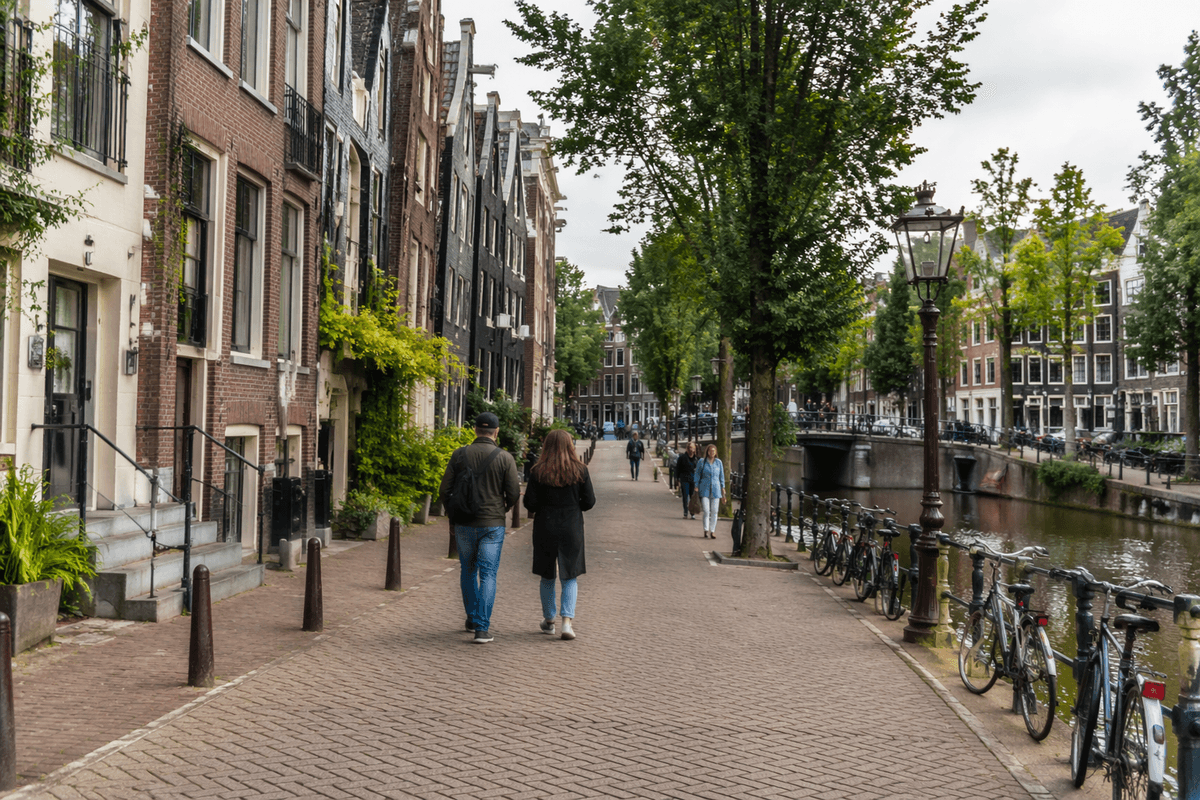
I usually decide my day in Amsterdam at the first bridge: do I want the “prettiest” canal photos, or do I want to actually keep moving without inching along behind tour groups? If your priority is classic canal scenery, aim for the Canal Belt and the Nine Streets (De Negen Straatjes) early—around 08:30–10:00—when the light is good and the sidewalks aren’t a bottleneck yet. It’s efficient for a first-timer because the views stack quickly, but it’s also the area where you’ll feel the slowest per kilometer once the late morning crowd arrives.
If you lean “culture,” cluster Museumplein and Vondelpark with a canal finish rather than trying to stitch museums into a canal-heavy loop. The museums are a time sink (in a good way), so plan a shorter walk: Rijksmuseum/Museumplein → Vondelpark edge paths → Leidseplein (lively, sometimes chaotic) → then cut north to the calmer canals around Egelantiersgracht in Jordaan. This works well when weather is iffy because you can duck indoors without wrecking the route; it works poorly if you’re trying to hit multiple ticketed museums in one day and still “wander.”
For a more local feel, commit to a westward drift into Jordaan and the quieter canals like Brouwersgracht—less monumental, more lived-in, and easier to improvise café stops without paying the “view tax.” And if revelry is the point, I’d keep the walking route tight: start around Rembrandtplein/De Pijp for energy, but set a firm cutoff for De Wallen if you dislike dense crowds; it’s fascinating, but it can swallow your evening. Either way, build your route to end near a tram line so you can bail out if rain or fatigue turns “one more canal” into a long, damp slog.
Historic neighborhoods worth exploring on foot
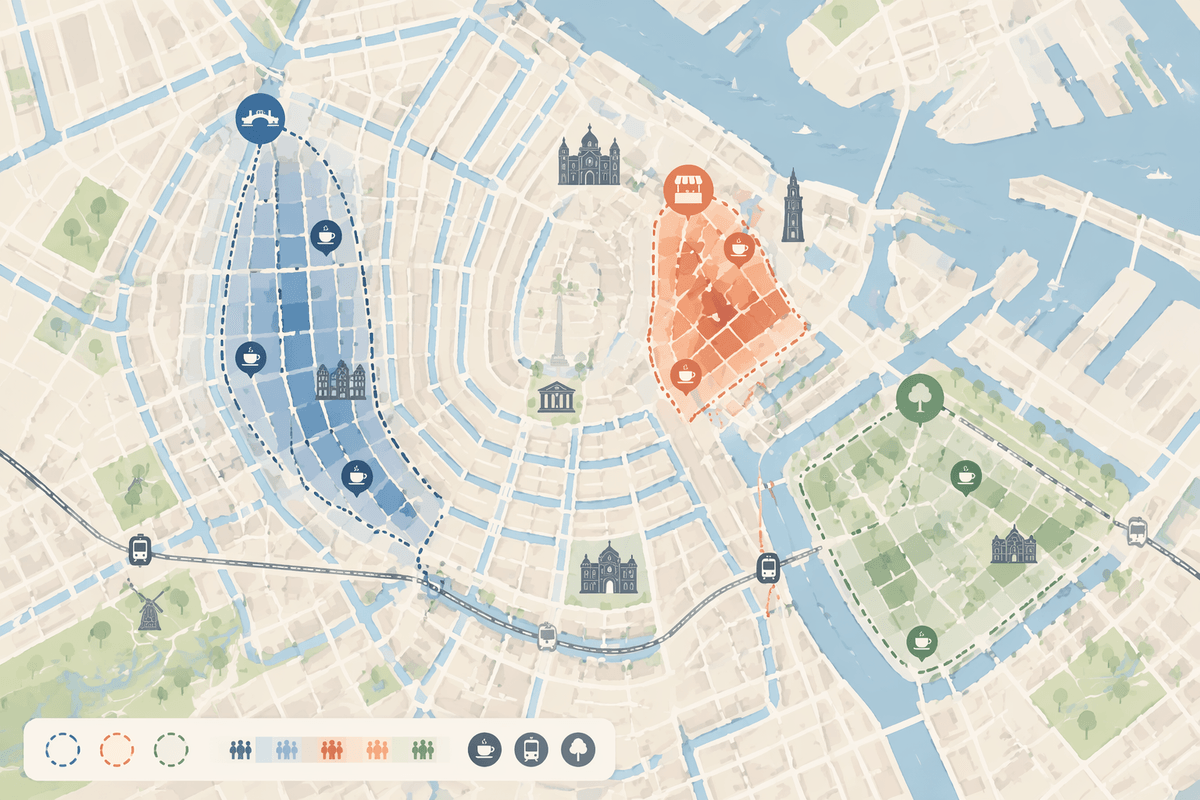
I felt the neighborhood choice most sharply the moment I stepped off the Dam-area axis and the noise dropped: that’s when Amsterdam starts to feel navigable on foot again. If you want “old Amsterdam” without getting stuck in it, use Nieuwmarkt as a hinge. The square can be busy at lunch, but the streets just east and south (toward the old city edge) stay walkable longer than the Dam/Red Light core, and you can decide in real time whether to skim De Wallen for 15 minutes (fascinating, but slow-moving at peak hours) or keep your pace on the quieter edges.
For a first-timer, Jordaan is the easiest historic win: it’s scenic quickly, and it forgives wrong turns. Start near Brouwersgracht and drift south via smaller canals toward the Nine Streets, but treat the Nine Streets as a “pass-through” rather than a shopping mission—late morning turns into a sidewalk shuffle. In decent weather, this is a 3–4 km loop depending on detours; in rain, it can feel exposed, so it helps that cafés are frequent and you can shorten the walk without losing the vibe.
If you want a calmer, more museum-adjacent historic area, aim for Plantage instead of forcing another Canal Belt lap. From Waterlooplein you can walk east into wider streets and greener pockets where the pace stays steady, then either return along the Amstel (prettier, but windier) or bail out via tram if your legs are done. It’s less “postcard canal,” but it’s where you’ll waste less time dodging crowds—and that’s often the difference between a satisfying afternoon and a map full of backtracking.
Canal walks: classic loops and quieter detours
The moment I stopped trying to “do the canals” and instead picked a single spine, my walks got cleaner and my map got less chaotic. For the classic loop, I like starting at Westerkerk (easy landmark, lots of tram access) and tracing Prinsengracht south toward Leidsestraat, then cutting east through the Nine Streets to Keizersgracht/Herengracht and finishing around the Bloemenmarkt/Muntplein. It’s the most “Amsterdam-on-a-postcard” stretch per kilometer, but it’s also where you’ll feel the crowd pressure hardest after about 10:30—especially on the tighter bridge approaches—so it rewards an early start more than almost any other walk.
When that central belt starts to feel like a conveyor belt, the quieter detour that still feels quintessential is to peel off toward Brouwersgracht and the Jordaan side canals (think Bloemgracht/Egelantiersgracht) and let your route drift rather than loop. This works well in the late afternoon when the light softens and the streets feel more residential; it works less well if you’re chasing landmarks, because you’ll trade “big” sights for rhythm—canal houses, bikes, and small cafés without the view markup.
Two practical route-builders that save backtracking: (1) Walk canal-to-canal in one direction, then return by tram or metro instead of forcing a second ring (Centraal and Muntplein are both easy reset points). (2) In wind or drizzle, choose the inner streets parallel to the canals for a stretch—same destination, less exposed—then pop back to the water when the weather cooperates. It’s not as photogenic minute-to-minute, but it keeps the walk enjoyable instead of turning it into a damp endurance test.
Wrap-up: the best Amsterdam walk is your mix
The best plan clicked for me when I stopped chasing a “perfect” loop and started building two-part walks: one busy, high-reward stretch early, then a calmer counterweight later. If you only have 2–4 days, pick one “postcard” canal spine (the central belt/Nine Streets area) for your before-10:00 window, and don’t punish yourself trying to repeat it at noon when every bridge becomes a bottleneck.
After that, let your afternoons do the work: Jordaan when you want easy, forgiving wandering; Plantage when you want steadier pacing and fewer crowd-stalls; Nieuwmarkt as the hinge when you’re deciding how much of the old-core intensity you can tolerate. If the weather turns or your feet do, treat trams/metro as a reset button, not a defeat—walk one direction on purpose, then ride back rather than backtracking through the same streets. Your “best” Amsterdam walk is the one that still feels good in hour three.