Why Baalbek feels bigger than expected
I remember standing just outside the ticket area thinking, “Okay, a couple of big columns, an hour, back to Beirut.” That assumption lasted about two minutes. Baalbek reads like a single “site” on a map, but on the ground it behaves more like a small district you walk through—layers of courtyards, thresholds, and scale tricks that keep resetting your sense of distance.
What makes it feel oversized isn’t only the famous Temple of Jupiter columns; it’s how the complex stacks experiences back-to-back. You finish one photogenic angle, then there’s another gate, another platform, another set of steps that pulls you deeper in. It’s satisfying, but it also means your time estimate can collapse fast—especially if you stop for plaques, shade breaks, or you’re waiting your turn for photos when a group tour arrives.
The practical implication: plan as if you’ll walk more than you expect, and decide upfront whether you’re okay seeing it “fast” or you want the site to breathe. A quick pass can work if your priority is the headline views, but the place rewards a slower pace—at the cost of a later lunch, a hotter afternoon, or tighter timing on the ride back through the Bekaa.
Best time to go and how long to stay
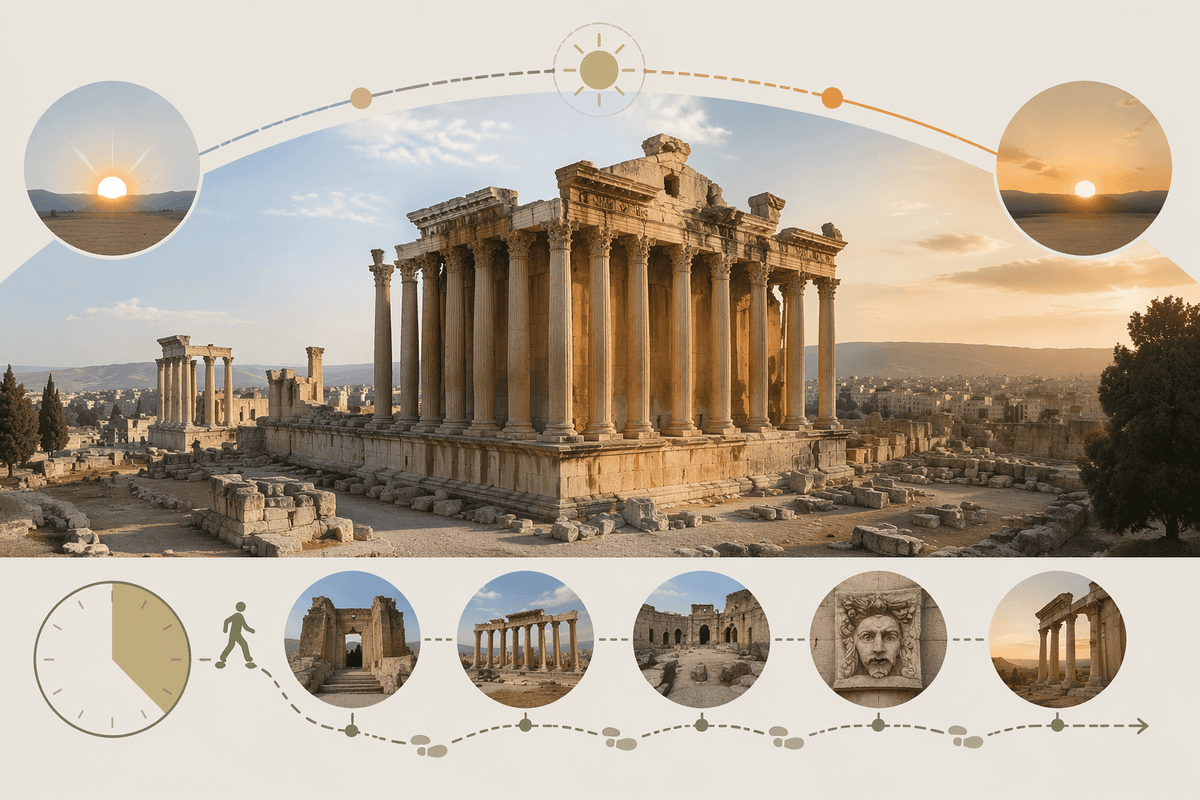
The moment I’d do differently is the start time: arriving late-morning sounds civilized, but Baalbek gets brighter, hotter, and busier in a way that makes the stones feel less grand and more exhausting. If you can, aim to be at the gate near opening—light is softer for photos, tour groups haven’t fully stacked up, and you’ll spend less time waiting to pass through the “main angles.” Late afternoon can also work, but it’s riskier if you’re relying on a return ride that doesn’t like delays or dusk.
Season matters more than people admit. In spring and autumn, you can walk the full complex without constantly hunting shade; in mid-summer, the same route feels longer because you’ll slow down, take more water breaks, and skip small corners that are actually worth it. Winter can be quiet and beautiful, but rain and wind turn the open courtyards into a comfort test.
Time-on-site: budget 2 hours if you’re doing a focused loop (headline temples, a few plaques, done). If you want it to “breathe”—photos, details, and a short guided explanation—plan 3 to 4 hours, because the site quietly adds minutes every time you think you’re finished.
Getting to Baalbek from Beirut or the Bekaa
The first real decision is whether you want control over timing or you want someone else to absorb the friction. From Beirut, a private driver (or a pre-booked taxi for the day) is the cleanest way to keep your “arrive near opening” plan intact—especially if you’re trying to do Baalbek and be back before evening. It costs more, but it buys you flexibility if you linger inside the ruins, or if a checkpoint slows traffic and your schedule starts slipping.
DIY by bus is doable, but it’s the option with the most variables. You’ll typically route through the Bekaa (often via Zahle or a hub like Chtaura), then switch onward to Baalbek; the trade is lower cost for higher uncertainty on departure times and seat availability, plus more mental load if you’re not fluent in the usual “where does this actually leave from?” station logic. If you’re only free for one day, that uncertainty can eat the very hours you wanted for the site.
If you’re already in the Bekaa, the trip becomes straightforward: short hop, easier taxis, and less pressure to “make the day worth it.” The main constraint still isn’t distance—it’s daylight and your return plan. If you don’t have a guaranteed ride back, set a hard turnaround time before you even buy your ticket, because Baalbek is exactly the kind of place that makes you run late without noticing.
Tickets, hours, guides, and on-site essentials
I got to the window feeling overly confident, then immediately slowed down: hours and pricing in Lebanon can shift with holidays, staffing, or “today’s reality,” so don’t build your whole day on a screenshot from last year. If your schedule is tight, treat the posted hours as a plan, not a promise—message your driver the night before with a “we aim for opening, but we’ll confirm at the gate,” so you’re not paying for idle time if things start late.
Tickets are typically straightforward on-site (bring cash to reduce hassle), but the small friction is what happens after you pay: there’s a lot to see and only limited on-site interpretation. DIY works if you’re happy with scale and photos, but you’ll miss the “why this is arranged this way” layer unless you’ve read up beforehand. A local guide (or a guide arranged through your driver/tour) costs more, yet it compresses the site into a cleaner 2–3 hour loop—useful if you’re trying to be back in Beirut before late afternoon traffic and checkpoints add uncertainty.
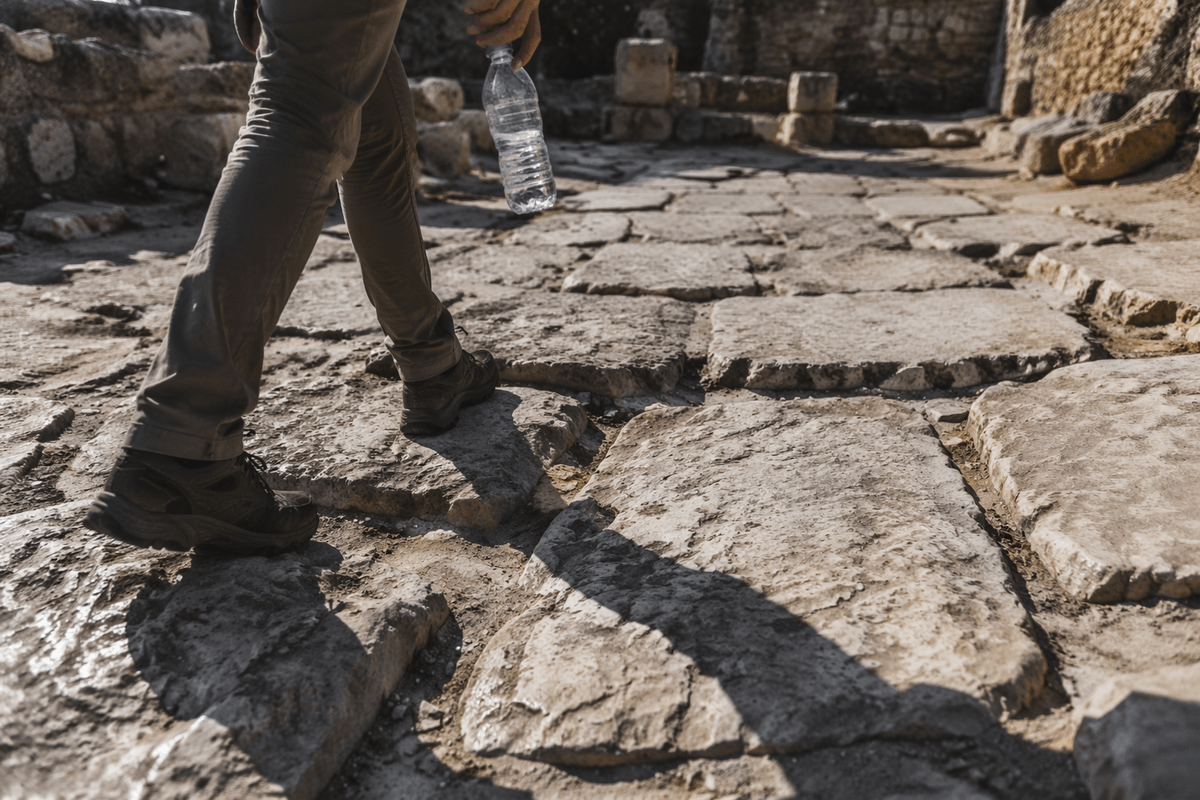
Essentials that actually matter: closed shoes (uneven stones), sun cover, and more water than you think you need—shade is patchy, and the heat changes how long the walk feels. Toilets and small kiosks can be inconsistent, so plan as if you’ll handle basics yourself; it’s not hard, just easier when you’re not improvising mid-visit.
What to see first inside the ruins
The first fork comes about five minutes after you enter: do you chase the iconic columns immediately, or do you “earn” them by moving through the complex in order. If you go straight for the Temple of Jupiter columns, you get the headline shot while your energy is high—but you’ll also collide with the same photo bottleneck as every tour group, and you may end up circling back through harsher light later. I prefer starting with the lower, more structured spaces first, then letting Jupiter land as the crescendo.
Begin with the Temple of Bacchus while your attention span is fresh. It’s the most intact-feeling building on site, and the carvings reward slow looking in a way that’s harder once the sun is fully overhead. The limitation is that it tempts you to spend 45 minutes on details and doorways; if you’re on a Beirut day-trip clock, set a mental cap (say, 25–30 minutes) before you drift into “just one more angle” mode.
From there, move out into the main courtyards and save the Temple of Jupiter columns for when you’ve got context for the scale. The climb and open platforms are easy to underestimate, and midday heat turns the stone into a fatigue multiplier—so if you’re already feeling it, take the shorter loop, get your Jupiter views, and skip the far edges rather than dragging and rushing the finish. If you still feel strong, that’s when the quieter corners start paying off.
Leave with confidence: safe, smooth, unforgettable
My last decision on-site is always about the return, not the ruins: once you’re an hour from your planned turnaround, stop “just one more corner” and check in with your ride. If you hired a driver, you’re paying for flexibility—use it, but be explicit about a leave time so you’re not negotiating in the parking lot as daylight slips.
On the safety/checkpoint anxiety: what helped most was treating the route like part of the plan, not an unknown. Keep ID accessible, stay patient if traffic pauses, and avoid creating a late-day scramble by pushing the visit too close to evening. If you want the least mental load in one day from Beirut, go driver or organized tour; if you’re optimizing budget, accept that the bus version trades money for unpredictability.
If you leave with a clear “turnaround time” and stick to it, Baalbek stops feeling risky and starts feeling simple—and that’s when it lands as unforgettable instead of stressful.