Why zinc stays unnoticed until routines feel off
It often starts as something easy to brush aside: meals feel repetitive, energy seems a little less steady, a cut takes longer than expected to stop being annoying, and nothing looks serious enough to explain why. That is part of why zinc can stay in the background for so long. The body uses it in small, constant jobs—repairing tissue, supporting taste and smell, helping immune cells communicate—so a modest shortfall may not create one clear signal. Instead, routines just feel slightly off, and people often blame stress, sleep, or a busy week.
The low intake can develop quietly when the same foods show up every day. A mostly plant-based or convenience-heavy pattern may include enough calories and still provide less zinc than expected, especially if it leans on grains, legumes, and packaged staples without much variation. In some cases, phytates in those foods bind to zinc in the gut and reduce how much is absorbed. So the issue is not always dramatic restriction; sometimes it is the slow effect of a narrow routine that looks reasonable on the surface.
Small body tasks depend on zinc more than expected
A small change is often how this shows up: food seems flatter than usual, a scrape lingers, or a cold feels harder to shake than it once did. Those moments can seem unrelated, but they overlap in one quiet way. The body uses zinc in short, repeated jobs that do not draw much attention when intake is steady. It helps cells divide, supports the tissue-repair process, and is involved in how taste and smell signals work. When coverage slips, the effect may feel scattered rather than obvious, which makes it easy to misread as stress or a rough week.
What complicates things is that these jobs happen in the background all day, not just when something goes wrong. Immune cells rely on zinc as they develop and communicate, and the lining of the skin and mouth turns over quickly enough that even a modest gap can matter over time. That does not mean every change points to low intake. It means routines built around the same breads, cereals, pasta, or legumes may provide less usable zinc than expected, especially when those foods crowd out more reliable sources.
What drives zinc demand beneath the surface

Sometimes the strain is not in the food itself but in what the body is being asked to handle that week. A healing scrape, a lingering cold, heavy training, or ongoing digestive irritation can quietly raise how much zinc is being used or lost. That can be hard to notice because appetite may look normal, and meals may not change much. The mismatch builds underneath routine eating: the same breakfast, the same grain bowl, the same snack foods, while tissue repair and immune activity are working a little harder than usual.
Part of the confusion is that zinc demand is not only about intake. Absorption and turnover shape the picture too. In a meal pattern built mostly from whole grains, beans, nuts, and convenience staples, phytates may reduce how much zinc is taken up in the intestine. At the same time, the body does not keep a large, easy-to-draw reserve, so coverage depends on regular replacement. That is why a routine can seem adequate on paper yet feel less steady over time, especially when variety narrows and needs shift.
Headline foods impress, but ordinary meals matter more
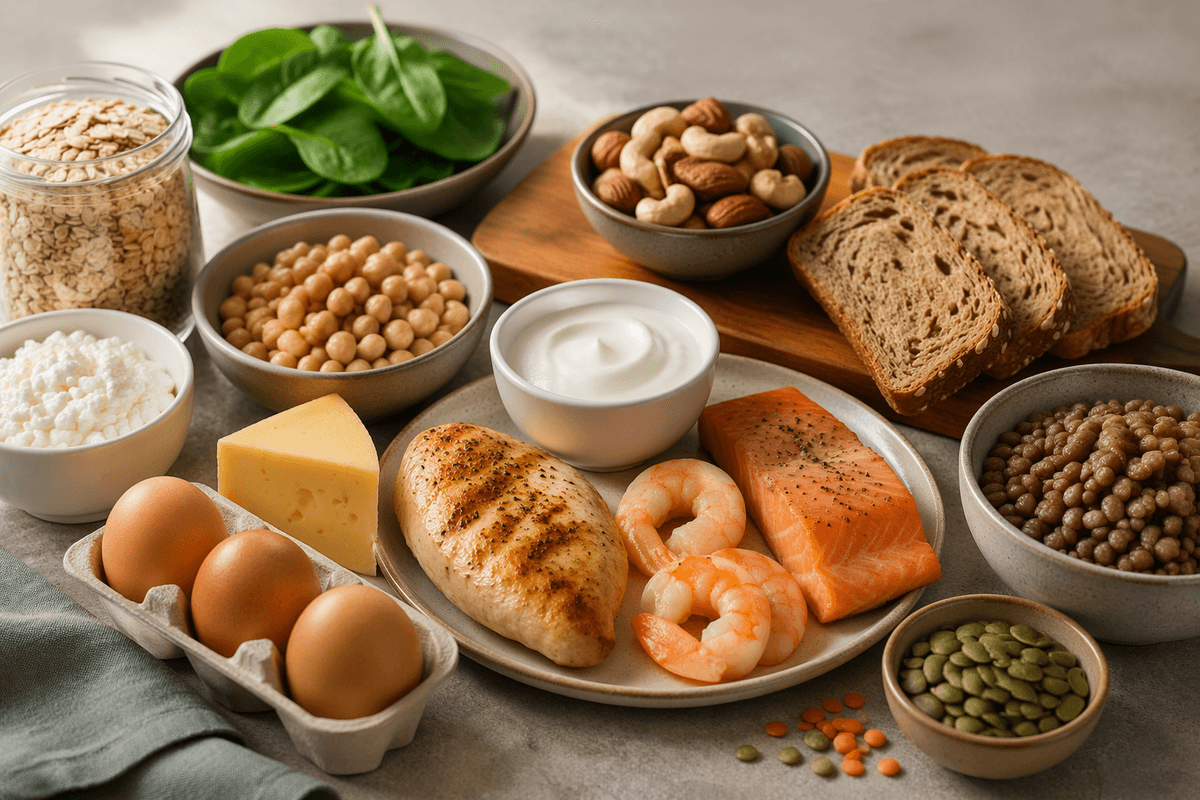
It is easy to focus on the foods with a health halo—oysters, red meat, pumpkin seeds—and assume zinc depends on eating the obvious stars. But the pattern usually turns on what shows up most often. A sandwich with cheese, a bowl of yogurt, eggs at lunch, chicken in leftovers, fortified cereal, beans paired with other foods: these ordinary repeats may shape intake more than a single “high-zinc” dinner. The catch is that meals can look balanced and still provide less usable zinc if the routine leans heavily on the same grains, bran cereals, legumes, and nut-based foods day after day.
That happens because zinc content and zinc absorption are not the same thing. Some foods contain zinc fairly well, but phytate-rich staples can reduce how much the intestine takes up from the meal. So a mostly plant-based routine may not be failing outright; it may just be less efficient than it appears. Over time, small differences in meal mix matter. A routine with varied protein foods and fewer repeated staples may cover zinc more reliably than one built around a handful of worthy-looking basics.
Plant sources help, yet absorption changes the picture
A bowl built around beans, brown rice, nuts, and whole-grain bread can look nutritionally solid, and in many ways it is. The part that gets missed is that zinc from those foods may not be taken up as efficiently as people expect. Plant foods such as beans, lentils, tofu, nuts, seeds, and whole grains do contribute zinc, but many of them also contain phytates. In the intestine, phytates can attach to zinc and make absorption harder, so the amount listed for a food is not always the amount the body can use.
That is why a routine that seems careful on paper can still drift low over time. If the same meals rely heavily on bran cereal, oats, legumes, nut butters, and grain bowls, the pattern may keep repeating that same absorption barrier. This does not mean plant-based eating is the problem. It means the mix matters. Foods like dairy, eggs, seafood, and meat tend to provide zinc more reliably, while plant-based routines may need more variety and a little more effort to cover the same ground. When meals stay narrow, it becomes easier to overestimate what the routine is delivering.
A healthy eating pattern can still miss the mark

You can look at a week of meals and see plenty to admire: whole grains, beans, salads, nuts, maybe a smoothie most mornings. On the surface, that pattern reads as careful and consistent. The mismatch is that “healthy” does not always mean well-covered for every nutrient. When the same staples keep repeating, zinc can end up modest rather than steady, especially if those meals are built around foods that also make absorption harder.
This is where people often misread the situation. They may assume the problem would show up only with obvious junk food or major restriction, not with a routine centered on oats, brown rice, hummus, grain bowls, and snack bars. But zinc adequacy depends on both supply and uptake. If a meal pattern contains only small amounts of more reliable sources—such as dairy, eggs, seafood, or meat—or skips fortified foods, the gap may build quietly over time.
That does not make the routine “bad.” It means a narrow version of healthy eating can be less complete than it looks, especially when convenience and repetition start choosing the menu.
Everyday nutrition improves through variety, not obsession
What tends to help most is not a perfect food list but a less repetitive week. When meals rotate between different protein foods and different starches, zinc coverage usually becomes steadier almost by accident. That matters because the body is responding to patterns, not one unusually “good” lunch. A dinner routine built from the same grains and legumes every day may keep running into the same absorption limits, while a mixed pattern changes both zinc supply and how available it is.
This is where obsession can backfire. People sometimes start chasing single foods or numbers and miss the larger mechanism: reliability comes from overlap. Eggs one day, yogurt or cheese another, beans with a different grain base, fortified cereal, seafood or meat if included—small shifts reduce the chance that one narrow habit keeps setting the terms.
If meals have become automatic, that may be the more useful place to look before assuming you need a supplement.