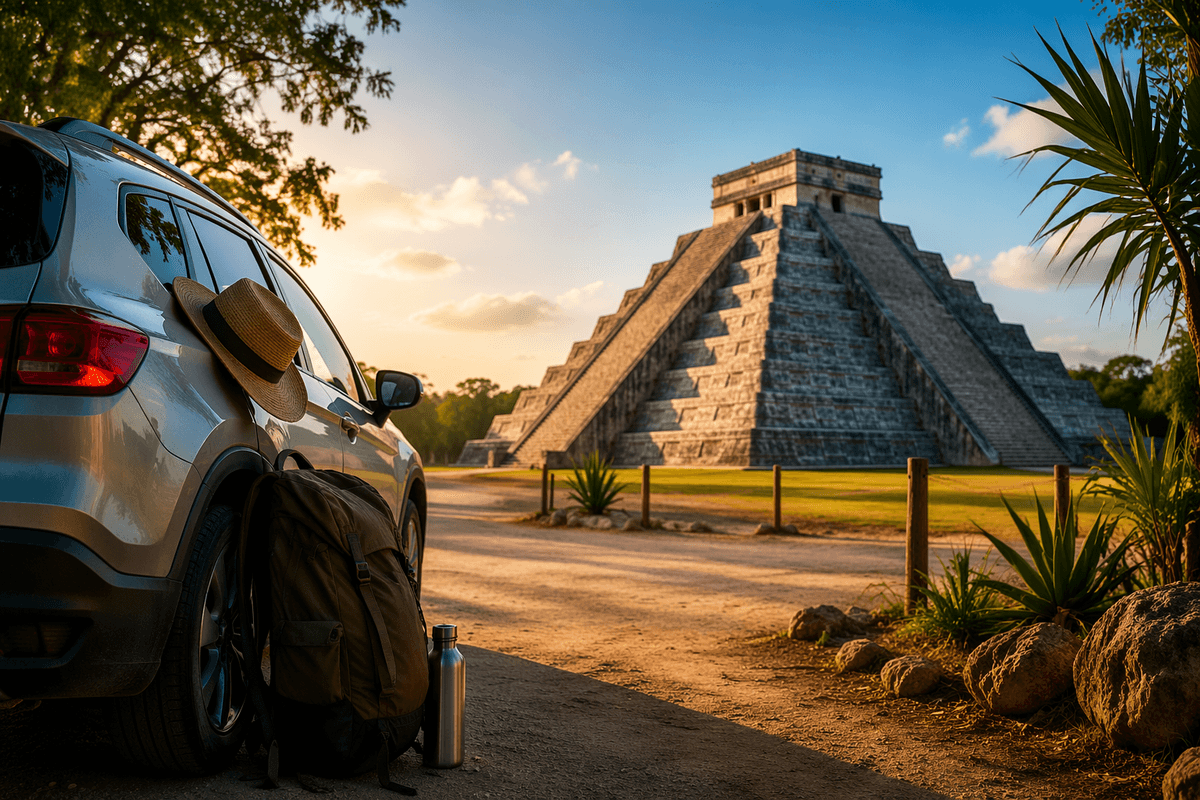
Tulum to Chichén Itzá: what’s the catch?
The first “catch” hit before I even left Tulum: you’re not just budgeting for a ruin, you’re budgeting for a long, front-loaded day where the best hours at Chichén Itzá happen earlier than your body wants. From Tulum it’s roughly 2.5–3+ hours each way depending on your route and stops, so any plan that starts “after breakfast” quietly turns into arriving right as heat and crowds ramp up.
The second catch is clock math. Tulum (Quintana Roo) and Chichén Itzá (Yucatán) can be on different time zones, which sounds minor until you’re aiming for an opening-time arrival or a timed return bus. If your phone auto-updates on the road, you can feel like you “lost” an hour mid-trip—great for being early, annoying if you’re cutting it close.
Last: it’s not one decision, it’s three stacked decisions—how you get there, how you handle midday (shade, water, tolerance for guided pacing), and how you get back when you’re already tired. Renting a car buys timing control but adds driving/parking friction; tours remove logistics but lock your pace; buses can be cheapest, yet the gaps and transfers are what make them feel longest.
Drive yourself: route, tolls, parking
Standing at the rental counter in Tulum, the decision isn’t “can I drive in the Yucatán?” so much as “do I want to be responsible for every small delay?” The cleanest run is Tulum → Cobá → Valladolid → Chichén Itzá (highways most of the way), and it’s straightforward in daylight. What doesn’t work as well: leaving late and trying to make up time. Topes (speed bumps), small-town slowdowns, and surprise fuel stops add minutes that stack fast.
Tolls are the other variable. You can avoid them, but the free roads tend to be slower and more mentally “busy,” which matters on the return when you’re cooked from heat. I liked paying for the calmer stretch because it lowered decision fatigue, even if it nudged the day-trip cost closer to a tour. At Chichén Itzá, parking is easy to find but not always as orderly as you’d hope—you’ll be waved into lots and asked to pay quickly, so have cash and don’t expect a perfectly marked system. The real win of driving is arriving early and leaving before midday crowds; the friction is you have to execute that plan yourself.
Guided tours: what you get (and don’t)

I almost booked a tour the night before, mostly because the idea of someone else handling the morning logistics felt worth paying for. That’s the core “works well” part of guided tours from Tulum: you get a single pickup point (often your hotel or a nearby meeting spot), a predictable sequence, and a guide who can turn Chichén Itzá from “big rocks in heat” into an actual story. If you’re short on energy, it’s hard to beat the mental relief of not watching clocks, turns, and parking lots.
What you don’t get is control over the day’s best hours. Many tours bundle a cenote and/or Valladolid, which sounds efficient but can put you at the ruins later than you’d choose on your own, exactly when shade disappears and crowds thicken. On-site time can also feel clipped: you’ll have a guided block, then a little free time that evaporates if the group runs late or someone disappears for a souvenir stop. And while tours can look “all-inclusive,” the friction is usually in the fine print—taxes, lockers, life jackets, and lunch style vary, so your real cost can drift upward if you assumed everything was covered.
Bus option: ADO schedules and transfers
I tried to make the bus plan “clean,” and the first friction point was realizing it’s rarely a single ADO ride from Tulum to the ruins—you’re usually stitching together Tulum → Valladolid, then Valladolid → Chichén Itzá (often to Pisté, then a quick taxi/collectivo). It works best if you’re comfortable with one transfer and you don’t mind the day feeling a bit more like logistics than freedom.
ADO is comfortable and predictable once you’re on it, but the constraint is the timetable: morning departures can sell out, and midday gaps can trap you in Valladolid longer than you want (fine if you planned lunch, annoying if you’re chasing an early arrival). Buy the first leg in advance if it’s a weekend or high season, then confirm the second leg the day before—return options are where the plan breaks most often.
At Chichén Itzá, buses don’t drop you “inside” the experience the way a tour does, and the last-mile from Pisté adds a small cash-and-time tax. The upside is you can nap on the way back; the downside is you’re scheduling your tired self, not your fresh self.
Quick comparison: time, cost, hassle
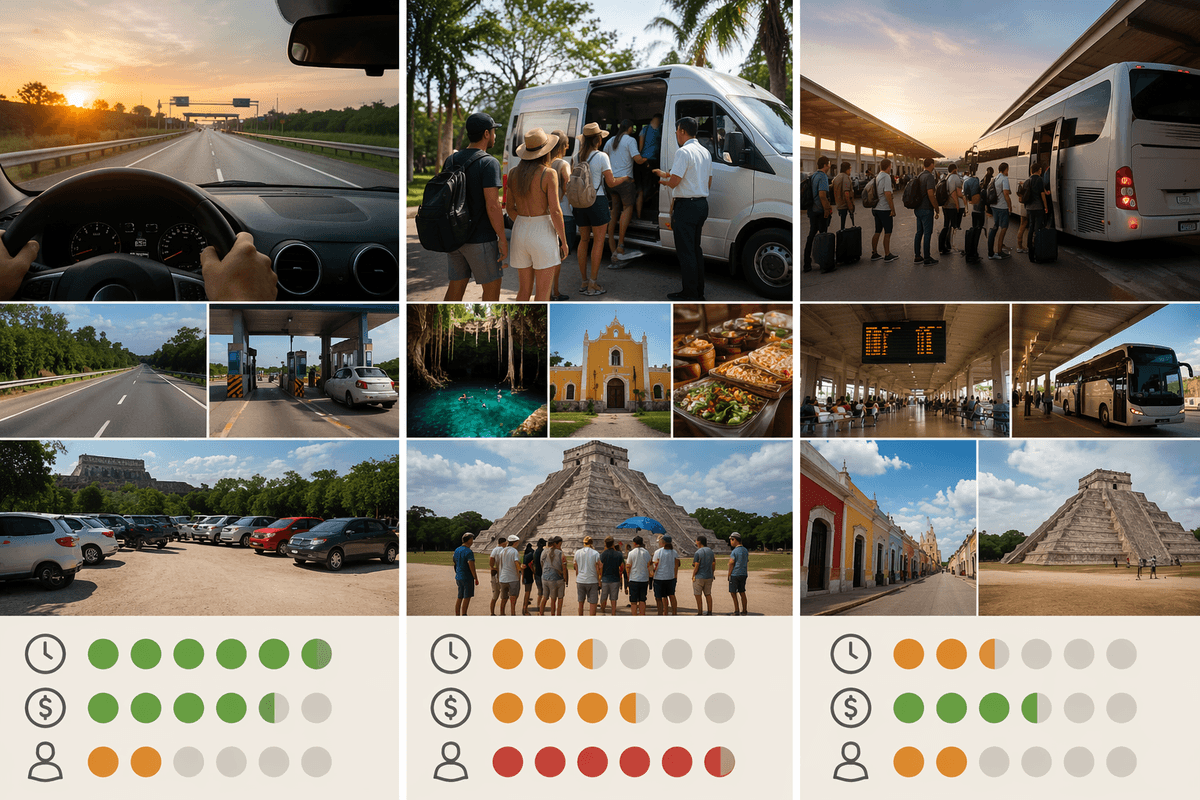
The quickest-feeling day is usually a rental car if you actually leave early: out of Tulum by 6:00–6:30am, at the gates around opening, and back before dinner. Door-to-door you’re often in the 6–8 hour total range plus whatever you choose to do on-site, but you’re paying for control (rental + fuel + possible tolls + parking) and carrying the mental load all day—especially on the return when you’re hot and low on patience.
Tours are the “lowest decision” option: you’ll get a fixed pickup (often 7:00–8:00am) and a guaranteed ride home, which matters when you don’t want to troubleshoot a missed bus. Time-wise, though, they can stretch into 10–12 hours because of added stops and group pacing; cost sits mid-to-high once you add the extras that aren’t truly included. If you’re sensitive to heat, a later arrival can make Chichén Itzá feel harder than it needs to.
Buses tend to be cheapest and easiest on your body (you can zone out), but the schedule is the boss: take the first Tulum → Valladolid, then immediately connect onward, and plan your return before you even enter the site. Miss a connection and you don’t just lose minutes—you lose chunks of the day.
Final pick: who should take which option
The option I’d pick comes down to what you’re protecting: time, energy, or flexibility. If you’re even mildly anxious about driving or you know you’ll be wiped by mid-afternoon, book a tour and treat the extra hours as the price of not troubleshooting anything when you’re tired—just read the inclusions carefully so you’re not surprised by add-ons. If you’re comfortable making a 6:00–6:30am call time happen, rent the car: it’s the only choice that reliably lets you hit the site early and leave when the heat and crowds start winning, but you’re signing up to stay sharp for the return leg when your patience is lowest.
If budget is the priority and you don’t mind a day that feels “scheduled,” take the bus—just commit to planning the return before you even walk through the entrance, because the whole plan collapses when a connection doesn’t line up. My practical decision cue: if you’re traveling with two or more people and you can execute an early start, driving usually feels like the best value; if you’re solo (or running on low energy), the tour or bus wins simply because it keeps the end of the day from turning into a logistics problem.