Why one meal can feel wrong twice
It can start with two different signals from the same plate: a slow burn rising behind the chest, then a tight, swollen feeling lower down that makes clothes feel less comfortable. That overlap is part of what makes food reactions easy to misread. A meal may seem to cause “heartburn” or “just bloating,” when both are building at once in different parts of the digestive tract.
One reason is pressure. Some foods may relax the valve between the stomach and esophagus, making it easier for acid to move upward. At the same time, a heavier or slower-moving meal can sit in the stomach longer, stretching it and raising pressure after eating. That extra fullness may increase belching and make reflux more likely, not because the symptoms are identical, but because they can feed into each other.
In other cases, gas adds another layer. If part of the meal ferments further along in the gut, fullness may build later and feel separate from the earlier burn, even though the same food started the sequence.
Reflux starts when the stomach pushes upward
Sometimes the first clue is a small rise after the last few bites: a pressure under the breastbone, a burp that does not fully relieve it, then a warm sensation climbing higher. That upward feeling often begins when the upper part of the stomach is stretched. As it fills, the pressure inside may increase enough to challenge the valve at the bottom of the esophagus, especially if that valve is already relaxing more than usual after a meal.
This is why reflux is not only about acid being present. Acid is normally in the stomach. The problem starts when stomach contents are pushed in the wrong direction. A large meal, a slower digestive pace, or extra swallowed air can all add to that upward force. In some cases, the stomach stays distended longer, which means the pressure is not brief. The result may feel inconsistent: burning one day, more burping than burning the next, even after similar foods.
That variation can be confusing because people often blame the strongest flavor in the meal. But the real driver may be mechanics rather than spice alone—the simple fact that a fuller, tighter stomach has more opportunity to push upward.
What drives this bloated pattern beneath the surface
At first, the fullness may seem out of proportion to what was eaten. A meal does not have to feel especially large to leave the abdomen stretched, unsettled, or unusually noisy afterward. Part of that pattern may come from timing: when the stomach empties more slowly, food and fluid stay in place longer, so pressure builds earlier up top while heaviness lingers below.
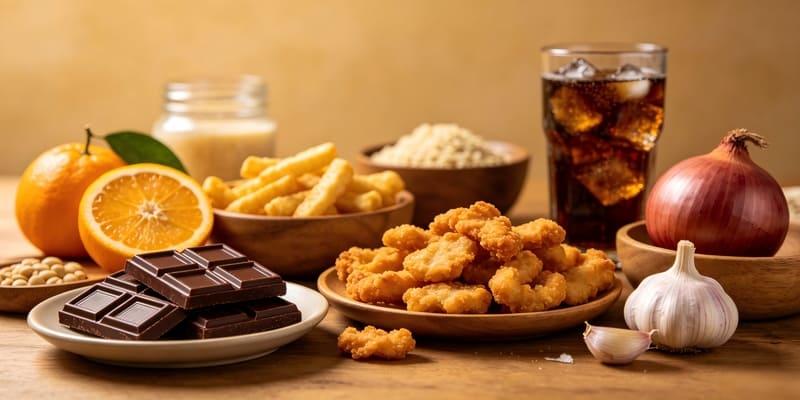
That slower pace can change what happens next. Fat-rich foods often delay gastric emptying, which means the stomach remains distended for longer and may trigger more belching or upward movement of acid. Farther down, certain carbohydrates may be broken down poorly and then fermented by gut bacteria. That fermentation produces gas, and gas increases intestinal stretching. The sensation is not always immediate, which is one reason the connection to a specific food can be easy to miss.
This is where people often get pulled in the wrong direction. A sharp taste or one obvious ingredient gets blamed, while the actual pattern involves pressure, delayed movement, and gas forming in stages. If the reaction seems inconsistent, that inconsistency may be part of the mechanism rather than a sign that nothing food-related is going on.
High-fat meals often trigger both sensations
A few bites into something rich, the meal may feel satisfying at first, then oddly heavy faster than expected. That is one reason fried foods, creamy sauces, and very fatty cuts of meat are often linked with both upper burning and lower fullness. The reaction is not always immediate or dramatic, which can make the pattern easy to dismiss.
Fat tends to slow how quickly the stomach empties. When food remains there longer, the stomach stays stretched for longer too, and that stretch may increase pressure against the valve above it. In some cases, fat may also make that valve relax more easily after eating. The result is a less stable setup: more opportunity for acid to move upward, and more time for the meal to keep sitting heavily.
This is why the same dinner can seem to cause two different problems. The first sensation may be reflux or repeated burping soon after eating, while the bloated feeling builds as the slowed meal continues to linger. If the portion was large, that added volume can make the effect more noticeable.
Not all sharp flavors act the same

What gets blamed first is often the strongest bite—the coffee, the tomato sauce, the citrus, the salsa. But those foods do not all act in the same way, and that is where meal reactions get confusing. One sharp flavor may seem to cause immediate burning, while another mainly leaves behind burping or a swollen, unsettled upper belly.
Part of the difference is where the effect is happening. Coffee may increase acid exposure in some people or make the upper digestive tract feel more sensitive, so even a modest reflux episode feels obvious. Tomato and citrus foods are acidic themselves, which can make reflux feel harsher if acid has already moved upward. Spicy foods are different again. They do not necessarily create more acid, but they may irritate an already sensitive esophagus or speed up awareness of discomfort.
That is why the same “spicy” or “acidic” label can mislead. The taste stands out, but the mechanism may be acid contact, sensitivity, or the rest of the meal around it.
Healthy foods can create confusing abdominal fullness
A bowl that looks light on paper can still leave the abdomen feeling crowded an hour later. Beans, lentils, raw vegetables, fruit, whole grains, and even large salads often get read as “safe” foods, so the discomfort can feel surprising. That misread happens partly because health value and digestive ease are not the same thing.
Some of these foods contain fibers and carbohydrates that are not fully absorbed in the small intestine. When they move onward, gut bacteria ferment them and produce gas. At the same time, bulky foods with a lot of volume may physically stretch the stomach sooner, even if the meal is not especially high in calories. The result may be pressure above, swelling below, or both building in stages rather than all at once.
This is why a meal built around vegetables, beans, or fruit may seem inconsistent: no obvious greasy trigger, yet noticeable fullness and repeated burping. In some cases, the food is not “wrong” so much as harder to process comfortably in that amount, combination, or timing.
Fizz, portions, and combinations change the experience
Sometimes the discomfort starts before the meal is even finished: a few quick burps, a rising tightness, then the sense that there is simply no room left. Carbonated drinks can add to that crowded feeling because the gas expands in the stomach and increases pressure from above. That does not always cause burning on its own, but in some cases it makes upward movement more likely, especially when the stomach is already full.
Portion size changes the picture more than people expect. A food that seems manageable in a small serving may feel very different in a large one, not because the ingredient suddenly became irritating, but because volume stretches the stomach further. That stretch can trigger more belching and create a stronger push against the valve above. The same meal may also empty more slowly when it is heavy, mixed, or eaten quickly.
Fizzy drinks with fried food, pizza with soda, or a large salad followed by dessert can stack pressure, fat, and gas in ways that are easy to misinterpret. If the pattern keeps repeating, it may be worth noticing the pairing and the amount, not just the most obvious food.